U.S. Government Strengthens Regional Health Security in West Africa Through Lassa Fever Preparedness Exercises
The U.S. Centers for Disease Control and Prevention (CDC) in collaboration with the International Association of National Public Health Institutes, African Field Epidemiology Network, Integrated Quality Laboratory Services, and Resolve to Save Lives led the planning and implementation of two regional Lassa fever simulation exercises in Cotonou, Benin, and Monrovia, Liberia, bringing together public health leaders from across West Africa to strengthen preparedness for infectious disease threats. Held May 4–8 in Benin and May 11–15 in Liberia, the exercises focused on improving countries’ ability to prevent, detect, and respond to Lassa fever and other emerging infectious diseases. Participants tested cross-border coordination, emergency communication, surveillance, laboratory systems, and outbreak response capabilities through realistic scenarios designed to reflect the challenges that countries may face during a rapidly evolving public health emergency.
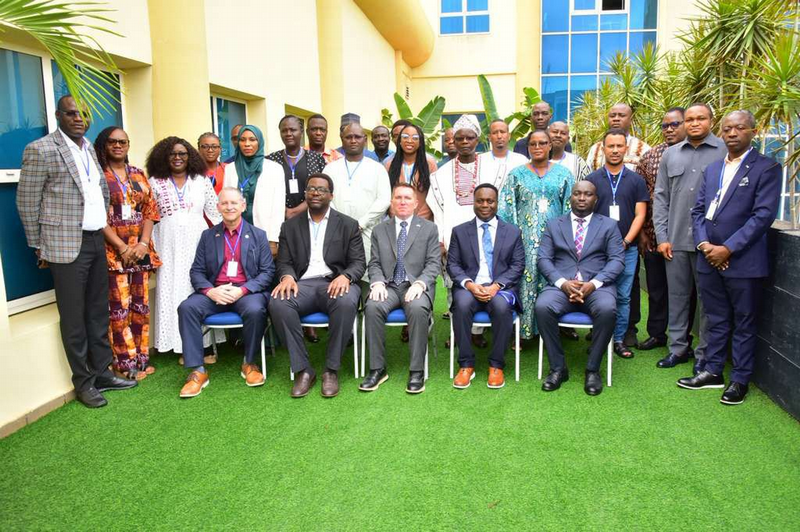
Group photo of the U.S. Embassy Benin Chargé d’Affaires with participants and facilitators
Building Regional Partnerships for Outbreak Preparedness
Lassa fever is endemic in several West African countries, and cross-border population movement makes regional coordination essential for effective outbreak response. Rapid information sharing, laboratory confirmation, coordinated investigations, and clear communication with affected communities can help countries identify and contain outbreaks before they spread more widely.
The exercises convened 30 participants representing national public health institutes from 15 West African countries: Benin, Burkina Faso, Cabo Verde, Côte d’Ivoire, Ghana, Guinea, Guinea-Bissau, Liberia, Mali, Mauritania, Nigeria, Senegal, Sierra Leone, The Gambia, and Togo.
Turning Simulations Into Action
During the exercises, participants worked through evolving Lassa fever outbreak scenarios that required real-time decision-making and cross-border coordination. The simulations helped participants identify strengths and operational gaps that could affect the speed and effectiveness of an actual outbreak response.
Participants examined challenges related to disease surveillance, laboratory confirmation, cross-border information sharing, epidemiological investigations, and risk communication and community engagement. The exercises also provided an opportunity to strengthen professional relationships and regional networks that can be activated during future public health emergencies.
At the conclusion of each exercise, participants participated in structured review sessions to identify practical steps to improve preparedness. Priorities included strengthening joint cross-border epidemiological investigations, improving laboratory coordination and timely data exchange, aligning risk communication and community engagement approaches, and better integrating core public health functions during emergency response.
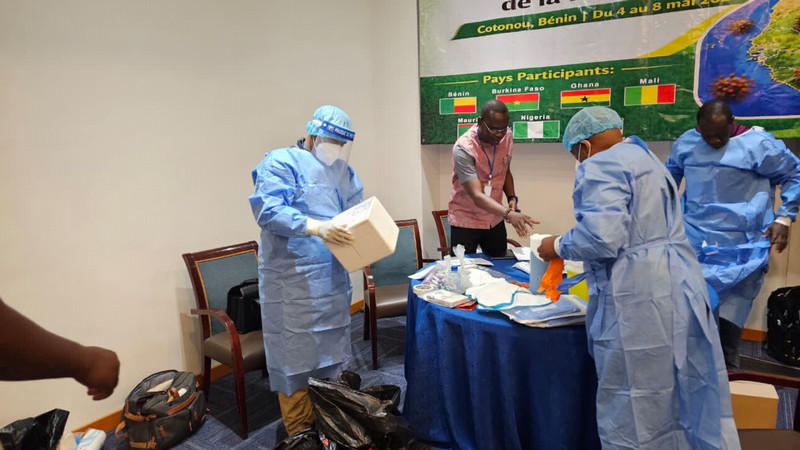
Exercise participants donning personal protective equipment for sample collection and transport.
From Evaluation to Continuous Quality Improvement
Following the three-day simulation, U.S. CDC staff led the participants through a two-day training in the ‘7-1-7’ timeliness assessment and quality-improvement strategy. By assessing the timeliness of outbreak detection (ideally 7 days from onset of the first case), notification (within one day of detection), and early response (within seven days of notification), participants were trained to identify bottlenecks to timely action, propose and implement strategies to remedy those bottlenecks, and iterate the process to strengthen robust outbreak control.
Strengthening Health Security at Home and Abroad
Regional preparedness exercises are an important component of broader efforts to strengthen global health security. Recent infectious disease outbreaks in Africa demonstrate how quickly health threats can emerge and reinforce the importance of strong early-warning systems, laboratory capacity, emergency operations, trained public health workforces, and effective communication. Continued collaboration with West African partners—including simulation exercises, workforce development, and stronger regional coordination mechanisms—helps countries detect and contain outbreaks as close to their source as possible.
By strengthening public health systems and regional partnerships, these efforts contribute to a more resilient global health security network and help reduce the risk of emerging infectious diseases spreading internationally, including to the United States.
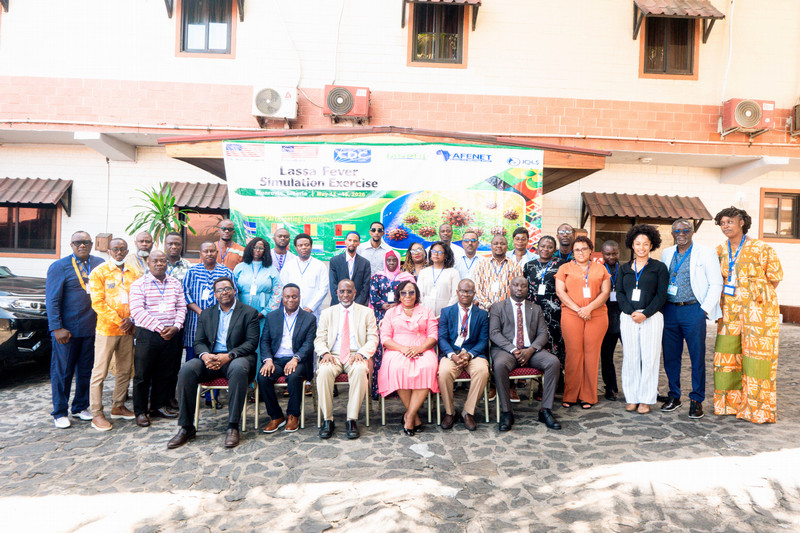
Group photo of the U.S. Embassy Liberia Chargé d’Affaires with participants and facilitators